
FIFA prepares a total revolution in the transfer market

The global transfer market is on the verge of a historic transformation. FIFA has approved a new regulatory framework that will profoundly change the rules on transfers starting on January 1, 2027, with measures that directly affect clubs, players, leagues and international football agents.
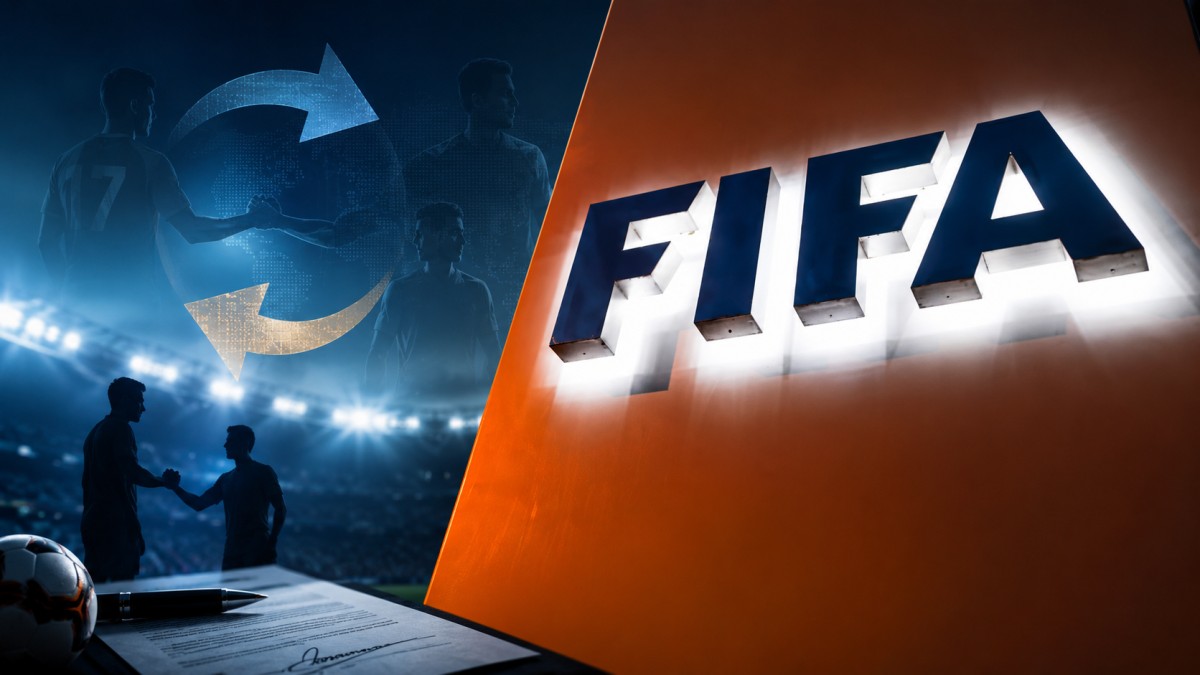
The reform comes after months of negotiations between FIFA, FIFPRO, representatives of clubs and leagues, with the aim of adapting the transfer system to the new legal landscape opened up by the so-called Diarra case. The organization led by Gianni Infantino is now looking for a model that is more transparent, proportionate and built on consensus.
Players will be able to earn part of their own transfer fee
One of the most striking measures is that certain players will be entitled to receive a share of the money generated by their own transfer. Specifically, players with fixed annual remuneration equal to or below 150,000 euros will have a direct percentage of the deal guaranteed.
The minimum amount will be 5% of the fixed transfer compensation, which must be paid by the selling club. This measure represents a major shift, as it recognizes the player as an active part of the economic value created by their departure.
The impact could be especially significant for players in secondary markets, smaller clubs or players with lower wages, who until now could be transferred without directly participating in the economic benefit of the transaction.
Termination clauses for all contracts
Another of the big changes will be the generalization of termination clauses or exit mechanisms in contracts. FIFA wants agreements between clubs and players to include, from the outset, clear, reasonable and proportionate formulas to allow for a negotiated exit.
This model echoes the system already commonly used in Spain, where termination clauses are part of professional contracts. The intention is to extend this mechanism to world football to provide greater legal certainty for both clubs and players.
This is not only about setting an exit figure, but about establishing balanced conditions that prevent deadlocks, prolonged disputes or disproportionate compensation.
More power for players in future decisions
The reform also changes how market rules will be decided in the coming years. FIFA, FIFPRO, leagues and clubs will be part of a new Global Platform for Social Dialogue, where future modifications must be negotiated by consensus.
This means players will have a more direct voice in decisions that affect their careers, their contracts, their labor rights, their rest and the international calendar.
Until now, many of these rules were applied vertically by the governing bodies. Under the new system, FIFA aims to turn the transfer regulations into a collective framework agreed by all the parties involved.
More protection against non-payments and abuse
The new framework also introduces measures to strengthen players' protection in situations of contractual abuse. Among the goals is to prevent practices such as isolating a player from the group to pressure them, making it harder for them to register, or using certain administrative tools as a mechanism of punishment.
In addition, non-payments will have clearer consequences. Outstanding amounts may generate interest, and disputes will be handled through FIFA's competent bodies, with the aim of providing a faster and more effective response.
Longer contracts for young players developed by the club
Another important point affects players under 18. Under certain conditions, clubs will be able to sign first professional contracts of up to five years with players developed within their setup.
This measure seeks to provide more stability for the clubs that develop them and for the players themselves, although it will be accompanied by safeguards to protect their sporting, educational and economic interests.
A historic reform since 2001
FIFA considers this change to be the most important reform to the Regulations on the Status and Transfer of Players since their creation in 2001. Its entry into force is scheduled for January 1, 2027, so the coming months will be key to understanding how each league and each federation adapts.
For clubs, the change will require reviewing contracts, market strategies and wage structures. For players, it represents progress in rights, economic participation and negotiating power.
The transfer market, as it has been known up to now, could be facing a total revolution. FIFA wants to open a new phase in which players, clubs and leagues have more legal certainty, more participation and clearer rules for everyone.
Follow all the fantasy information on our WhatsApp channel
Recent Post